Showing posts with label Differentiated Instruction. Show all posts
Showing posts with label Differentiated Instruction. Show all posts
Friday, April 24, 2015

Friday, February 27, 2015
Differentiation Through Social Media
Edutopia shares 50+ Tools for Differentiating Instruction through Social Media. This article demonstrates that by examining students readiness, interests and learning profiles we can differentiate instruction using a variety of social media tools. Check out these tools!
 |
| Edutopia: Differentiated instruction |
Wednesday, October 15, 2014
What Differentiation Is (and Is Not)
Edudemic shares the following charts about What Differentiation Is (and Is Not).
 |
| http://www.edudemic.com/what-differentiation-is-and-is-not/ |
Monday, September 29, 2014
Student Profile: A Google Survey
 |
| Google Images |
Create your Student/Class Profile using Google Survey.
With the click of a few buttons you can develop a
student /class profile that can be easily accessed on
your Google Drive!
Thursday, September 11, 2014
Differentiated Assessment
Differentiated assessment is the ongoing collection of data before, during and after instruction to better facilitate learning. Click here to find examples of differentiated assessment (formative pre-assessment tools, assessment during the learning, formative assessment after the learning, and summative assessment). More examples of 25 Quick Formative Assessments for the Differentiated Classroom.
 |
| Google Image |
Saturday, April 5, 2014
What Do You Want To Create Today?
Great ideas for students to choose activities of interest and/or for teachers to differentiate instruction!

http://maps.playingwithmedia.com/
Sunday, March 23, 2014
Thursday, March 20, 2014
Tips and Strategies for Effective Differentiation
The following video will assist in providing tips on how to meet the needs of all students.
YouTube
YouTube
Tuesday, February 25, 2014
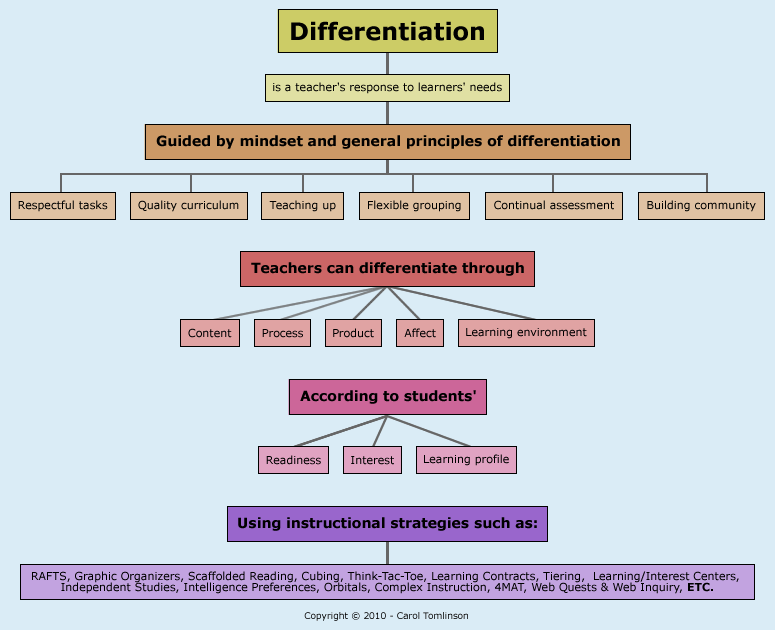
Broadening the View of Differentiated Instruction

Thursday, September 12, 2013
Friday, August 2, 2013
Learning for All
Learning For All is our Ministry Resource for assessment and instruction for students K-12.
Classroom Use: "Educators from Kindergarten through Grade 12 can use this process to help plan and deliver instruction that benefits all students, from high achievers to those who need additional support." (Learning For All)

Classroom Use: "Educators from Kindergarten through Grade 12 can use this process to help plan and deliver instruction that benefits all students, from high achievers to those who need additional support." (Learning For All)

Sunday, July 28, 2013
Integrating Technology in the Classroom
Classroom Applications:
YouTube
- students are creating using digital tools
- makes learning fun and meaningful, increases motivation and engagement
- a way for students to express learning
- students takes ownership of learning
- students can connect to a global audience
- students have an authentic audience
- potential for everyone to learn at their own pace
- teachers can readily see that the students that require additional support
- roll of teacher is facilitator
- it's about the processes
YouTube
Subscribe to:
Posts (Atom)